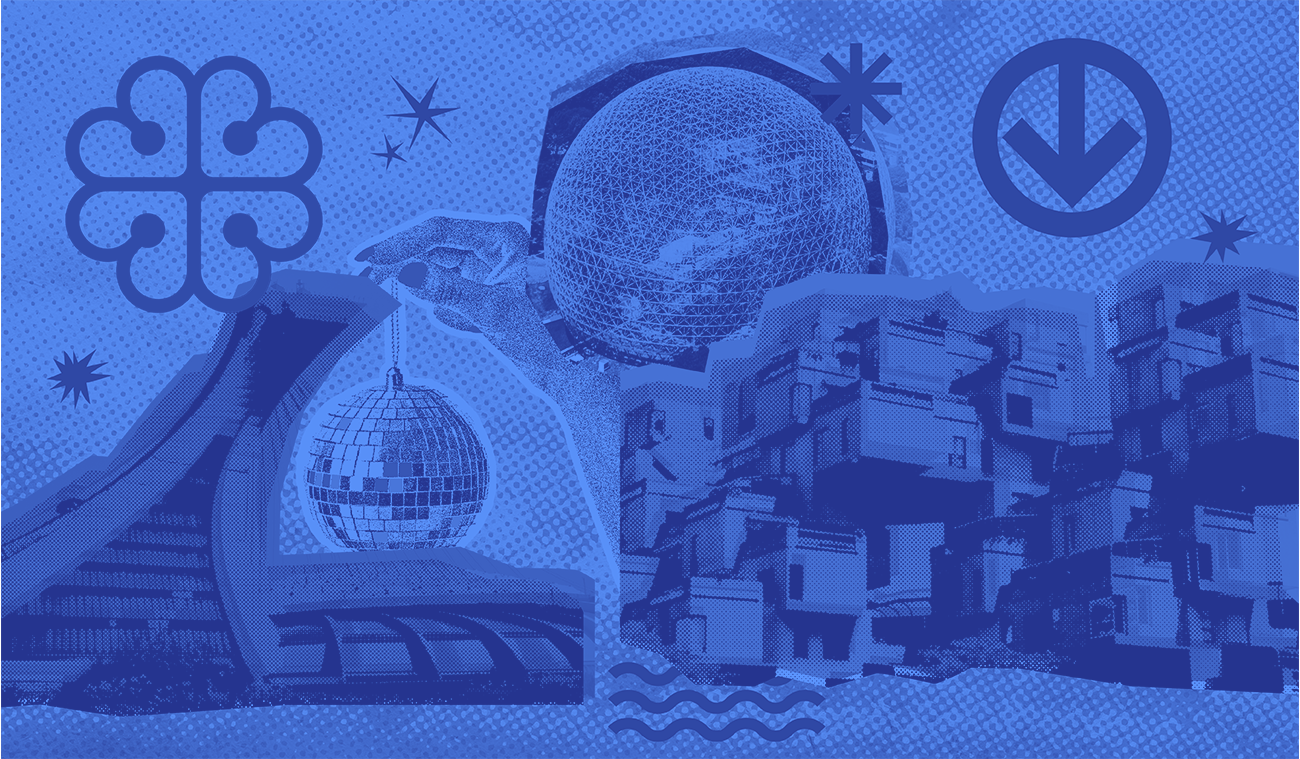
In 2027, Montréal celebrates two historic milestones that changed the city forever: the 60th anniversary of Expo 67 and the 50th anniversary of the 1976 Olympic Games.
These two global events were more than moments in history. They represented ambitious visions that transformed Montréal’s landscape, introduced millions of visitors to the city, and created landmarks that continue to inspire students, travellers, and locals today. From futuristic architecture and engineering achievements to world-class cultural attractions and sporting venues, the legacy of Expo 67 and the Olympics can still be experienced throughout Montréal.
A City Ready to Dream Bigger
In the 1960s, Montréal was undergoing a period of enormous change. The Quiet Revolution was reshaping Québec society, and the city was redefining its identity.
At the centre of this transformation was Montréal Mayor Jean Drapeau, a visionary leader who believed the city had the potential to become one of the world’s great destinations. Drapeau saw major international events as opportunities to reshape Montréal’s future and showcase the city on a global stage. Through projects like Place des Arts, the Montréal Metro, Expo 67, and eventually the 1976 Olympic Games, he helped redefine Montréal’s landscape and strengthen its reputation as a modern, innovative city.
Expo 67: The Moment Montréal Introduced Itself to the World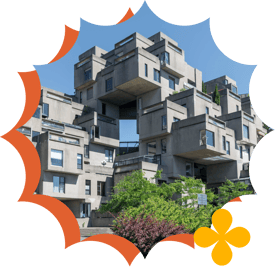
When Canada celebrated its centennial in 1967, Montréal hosted the1967 International and Universal Exposition, one of the most successful World Expos of the 20th century. Under the theme “Man and His World,” Expo 67 welcomed more than 50 million visitors from around the globe. Countries showcased their culture, technology, architecture, and ideas about the future.
For many international visitors, Expo 67 was their first introduction to Montréal, presenting the city as creative, multicultural, and forward-thinking. The event transformed Montréal’s global reputation, introducing the world to a city where history, culture, innovation, and diversity came together.
Building Islands for the Future
One of Expo 67’s greatest achievements was the creation of the site itself. To host the World’s Fair, Montréal transformed the landscape of the St. Lawrence River by expanding Île Sainte-Hélène and creating Île Notre-Dame. The scale of the project was extraordinary. Soil and materials from major construction projects happening throughout the city, including the excavation of Montréal’s new metro system, helped shape the land where Expo would welcome millions of visitors. In just a few years, an entirely new exhibition site emerged in the middle of the river, connected to the city by new infrastructure and public transportation.
The project was a symbol of Montréal’s ambition: imagine something impossible, then build it!
From International Pavilions to Montréal Landmarks
Many of the structures created for the World’s Fair were designed to showcase bold ideas about architecture, design, and the future. Several of them went on to become lasting landmarks and remain part of Montréal’s identity today.
Perhaps the most famous example is Habitat 67, designed by architect Moshe Safdie. Originally created as a housing experiment for Expo 67, the modular structure challenged traditional ideas about urban living. Its unique arrangement of stacked concrete units, private terraces, and interconnected spaces offered a bold vision for how cities could evolve. More than 50 years later, Habitat 67 remains one of Montréal’s most recognizable buildings and continues to inspire architects around the world.
Expo 67 also introduced visitors to some of the most innovative pavilions of the era. The United States Pavilion, designed by architect Buckminster Fuller, featured a massive geodesic dome that became one of the fair’s most recognizable symbols. Today, the structure lives on as the Montréal Biosphère, an environmental museum dedicated to sustainability and climate awareness.
The former France Pavilion was transformed into the Casino de Montréal, while other Expo structures, including the Canada Pavilion, Africa Pavilion, and Place des Nations, continue to preserve the memory of this defining moment in Montréal’s history.
The legacy of Expo 67 extended beyond its buildings. The islands created for the World’s Fair remain an important part of Montréal today. Île Notre-Dame, originally created as part of the Expo site, later became home to the Circuit Gilles-Villeneuve, where the Canada Formula 1 Grand Prix takes place. What began as an ambitious vision to welcome the world continues to bring visitors from around the globe to Montréal decades later.
9 Years Later: the 1976 Olympic Games
Less than a decade after Expo 67, Montréal once again welcomed the world. In 1976, the city became the first Canadian city to host the Summer Olympics. More than 6,000 athletes from 92 countries competed during sixteen unforgettable days. The Games showcased Montréal’s ability to organize a global event and reinforced the city’s reputation as an international destination.
The Games also produced moments that became part of Olympic history. At just 14 years old, Romanian gymnast Nadia Comăneci earned the first perfect 10 in Olympic gymnastics history. The achievement was so unprecedented that the electronic scoreboard wasn't even programmed to display a perfect score, showing 1.00 instead. By the end of the Games, Comăneci had earned seven perfect 10s and become one of the greatest gymnasts of all time.
The Olympic Stadium: An Architectural Icon
Designed by French architect Roger Taillibert, the Olympic Stadium became one of Canada’s most recognizable landmarks. Rather than designing a traditional rectangular arena, Taillibert envisioned a futuristic structure inspired by organic forms, with sweeping concrete curves and a soaring inclined mast that made the Stadium look more like a monumental sculpture than a sports venue. His bold vision pushed the boundaries of architecture and engineering.
The project was ambitious and challenging. Construction delays and technical difficulties made it one of Québec’s most debated public projects, and the stadium became known by both admirers and critics for its enormous scale. The soaring cost even earned it the nickname "The Big Owe," a play on its official nickname, "The Big O."
Yet, fifty years later, the Olympic Stadium remains one of Montréal's defining symbols, hosting concerts, major sporting events, exhibitions, and community celebrations while welcoming millions of visitors each year.
The World's Tallest Inclined Tower
Rising 165 metres above Olympic Park, the Montréal Tower remains the tallest inclined tower in the world, leaning at an impressive 45-degree angle (yes, even higher than the leaning tower of Pisa!). Originally designed as the anchor for the Stadium's retractable roof, it has become one of Montréal's most recognizable landmarks in its own right.
Following an extensive renovation, the Tower's observatory is reopening this year, once again giving visitors the chance to ride its famous funicular and enjoy panoramic views stretching from Mount Royal and downtown Montréal to the St. Lawrence River and beyond.
An Olympic Park That Never Stopped Evolving
Perhaps Montréal's greatest achievement is how it transformed Olympic infrastructure into spaces that continue to educate, entertain, and inspire. While many Olympic venues around the world struggle to find a purpose after the Games, Montréal chose a different path, turning its Olympic Park into one of the world's most successful examples of a lasting Olympic legacy.
The former Olympic Velodrome became the Montréal Biodôme, where visitors can now journey through five ecosystems ranging from a tropical rainforest to the icy sub-Antarctic, learning about biodiversity and conservation in an immersive setting. And just steps away, they can visit the Montréal Botanical Garden, one of the world's largest botanical gardens, the Insectarium, and the Planétarium. Together, these attractions form Space for Life, Canada's largest natural science museum complex, offering hands-on learning experiences in environmental science, astronomy, botany, and entomology.
The Olympic Sports Centre continues to train elite athletes and host major competitions, while the Stadium welcomes concerts, exhibitions, festivals, sporting events, and large public gatherings. Few Olympic parks anywhere in the world remain this active fifty years after hosting the Games.
Why this is the Year to Experience Montréal
In 2027, Montréal celebrates two milestones that helped shape the city we know today: the 60th anniversary of Expo 67 and the 50th anniversary of the 1976 Olympic Games. Throughout 2026 and 2027, commemorative exhibitions, guided experiences, special programming, and celebrations across the city will invite visitors to rediscover these defining moments in Montréal's history. The Olympic legacy will also continue into the future as Montréal welcomes a stop on the Olympic Qualifier Series on the road to the Los Angeles 2028 Olympic Games, once again bringing elite athletes from around the world to the city.
Expo 67 lasted only six months. The Olympic Games lasted only sixteen days. Yet together, they transformed Montréal into the vibrant, multicultural, internationally recognized city our student groups experience today.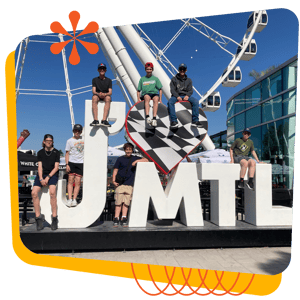
Few destinations offer the opportunity to stand inside the legacy of two world-changing events in a single tour. Students can stroll through Old Montréal, explore the islands created for Expo 67, admire the visionary architecture of Habitat 67, ride to the top of the world's tallest inclined tower, discover Olympic venues that have become world-class science museums, and experience the French language and Québec culture that make Montréal unlike anywhere else in North America.
Whether your focus is history, architecture, engineering, science, language learning, sports, or culture, Montréal offers countless opportunities to bring classroom learning to life. Every neighbourhood, landmark, and attraction tells part of the story of a city that dared to dream bigger—and succeeded.
As Montréal celebrates these historic anniversaries, there has never been a better time for the next generation of students to discover a destination where history isn't just remembered—it's still being lived.
Ready to experience Montréal?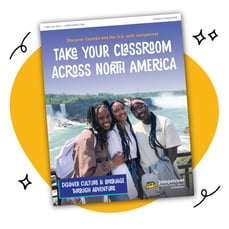
Explore our Montréal tours and start planning an unforgettable educational experience for your group.
To explore all these destinations and more, check out our new domestic brochure.